18-Hour NYS CCW Course | Bayside Queens Concealed Carry Training (BVAC)
.png)
Complete your New York State concealed carry firearm safety training at BVAC Rescue Response Training Center in Bayside, Queens. This 18-hour NYS CCW course is designed for eligible New York concealed carry applicants, including applicants from New York City, Queens, Brooklyn, Manhattan, the Bronx, Staten Island, Nassau County, Suffolk County, Westchester County, and surrounding communities.
The course includes 16 hours of in-person classroom instruction and 2 hours of live-fire training conducted as part of the New York State concealed carry firearm safety training program. Instruction is focused on firearm safety, responsible ownership, New York firearm law, situational awareness, conflict de-escalation, safe storage, marksmanship fundamentals, and practical firearm handling.
BVAC provides training in a dedicated professional training facility in Bayside, Queens with experienced instructors who bring backgrounds in law enforcement, emergency response, public safety, and firearms instruction.
18-Hour NYS CCW Course in Queens, NYC
New York State's concealed carry firearm safety training standards require qualifying students to complete 16 hours of in-person classroom instruction followed by 2 hours of live-fire training and a proficiency assessment.
This course is structured to address the New York State Division of Criminal Justice Services and New York State Police minimum standards for concealed carry firearm safety training.
Students must successfully complete both the classroom and proficiency requirements before receiving course-completion documentation.
Who Should Take This Course?
This course may be appropriate for:
- First-time New York State concealed carry applicants
- New York City concealed carry applicants
- Queens residents applying for an NYC concealed carry license
- Applicants from Brooklyn, Manhattan, the Bronx, and Staten Island
- Nassau County, Suffolk County, and Westchester applicants where the training requirement applies
- Eligible license holders completing required training for renewal
- Responsible firearm owners seeking structured safety and legal education
- New shooters who want professional instruction in a controlled training environment
Important: Licensing requirements can vary by jurisdiction and individual circumstances. Students should confirm current requirements with the licensing authority responsible for their application.
What You Will Learn
The classroom portion of the NYS concealed carry course includes training in the subject areas established by New York State for concealed carry firearm safety training.
Firearm Safety & Responsible Handling
- General firearm safety principles
- Safe firearm and ammunition handling
- Firearm operation and function
- Range safety
- Cleaning and maintenance considerations
- Holster considerations and retention
- Responsible concealed carry practices
Safe Storage & Transportation
- New York firearm storage requirements
- Secure firearm storage
- Safe transportation practices
- Preventing unauthorized access
- Responsible storage in the home and vehicle
New York State & Federal Firearm Law
- New York firearm laws relevant to concealed carry
- Federal firearm restrictions
- Licensing responsibilities
- License renewal and recertification concepts
- Firearm transfer requirements
- Restricted and sensitive locations
- Legal responsibilities associated with carrying a firearm
Situational Awareness & Conflict De-Escalation
- Situational awareness
- Recognizing developing threats
- Conflict avoidance
- Verbal and non-verbal de-escalation strategies
- Retreat and disengagement considerations
- Responsible decision-making
Interactions With Law Enforcement
- Considerations during traffic stops and other law-enforcement encounters
- Following lawful commands
- Communication during an encounter
- Responsible firearm handling when interacting with law enforcement
Use of Force & Legal Responsibility
- New York principles involving the use of physical and deadly physical force
- Duty-to-retreat considerations where applicable
- Decision-making during potentially dangerous encounters
- Legal and personal responsibilities following a defensive incident
Additional Required Safety Topics
- Effects of alcohol and drug use on firearm safety
- Conflict management
- Mental-health and suicide-prevention awareness
- Responsible firearm ownership
Marksmanship Fundamentals
- Proper shooting stance
- Grip
- Sight alignment
- Sight picture
- Breathing
- Trigger control
- Safe presentation and handling of the firearm
Written Proficiency Examination
Following completion of the required classroom instruction, students must demonstrate their understanding of the course curriculum by completing a written proficiency examination.
New York State minimum standards require students to achieve a score of at least 80% on the written examination.
2-Hour Live-Fire Training & Qualification
Students must also complete the required 2-hour firearm proficiency portion of the course. Training includes supervised instruction and evaluation in the skills required under the New York State concealed carry firearm safety training standards.
Training includes:
- Range and training-area safety
- Firearm condition checks
- Safe loading and unloading
- Dry-fire exercises
- Safe drawing and presentation
- Target acquisition
- Safe re-holstering
- Controlled firearm discharge
- Required proficiency assessment
Students must successfully demonstrate the required firearm-handling and shooting proficiency before course completion.
Why Take Your NYC CCW Course at BVAC?
Professional Training Facility
BVAC Rescue Response Training Center is a dedicated training facility in Bayside, Queens. Students train in a professional classroom environment designed for public-safety, emergency-response, medical, and firearm-safety education.
Experienced Instructors
Our instructional team brings extensive experience in law enforcement, public safety, emergency response, professional education, and firearm training. Courses emphasize safety, responsible ownership, sound decision-making, and practical skills.
Training for NYC Applicants
BVAC regularly serves concealed carry applicants from throughout New York City. Our Bayside location makes the course particularly convenient for applicants from Queens while remaining accessible from Manhattan, Brooklyn, the Bronx, Staten Island, Nassau County, and Long Island.
More Than Just Passing a Course
Our goal is not simply to prepare students to complete a written examination or firearm qualification. The course emphasizes the knowledge, judgment, safety habits, and responsibilities that come with firearm ownership and concealed carry.
Convenient CCW Training in Bayside, Queens
BVAC Rescue Response Training Center
214-29 42nd Avenue
Bayside, NY 11361
Our training center is located near the Bayside Long Island Rail Road station on the Port Washington Branch and is accessible by local bus service.
The location provides convenient access for students traveling from:
- Bayside
- Flushing
- Fresh Meadows
- Whitestone
- College Point
- Douglaston
- Little Neck
- Astoria
- Jamaica
- Brooklyn
- Manhattan
- Bronx
- Staten Island
- Nassau County
- Long Island
Accessibility Notice: BVAC Rescue Response Training Center is located on the second floor and does not have an elevator.
What Should I Bring to the CCW Course?
- A valid government-issued photo ID
- Your course registration confirmation
- Any additional materials specified in your pre-course instructions
- A notebook (pens are provided)
Do not bring a personal firearm into the BVAC facility unless you have been specifically instructed and authorized to do so by the course staff.
Students will receive additional instructions concerning equipment and the practical portion of the course when applicable.
Course Completion & Certificate
Students who successfully complete the required classroom instruction, written examination, firearm training, and proficiency assessment will receive course-completion documentation for use as part of the applicable concealed carry licensing process.
Successful completion of this course does not guarantee that a concealed carry license will be issued or renewed. The appropriate licensing authority makes the final determination concerning every application.
Students are responsible for meeting all licensing requirements established by New York State and their applicable licensing jurisdiction.
Applying for a NYC Concealed Carry License?
The 18-hour firearm safety course is only one component of the New York City concealed carry application process.
BVAC also offers an NYC Concealed Carry Permit Application Assistance Course for applicants who want additional guidance with the application process, including organization of required documents and navigation of the NYPD licensing process.
NYC Concealed Carry Application Assistance
Frequently Asked Questions
Is this the 18-hour New York concealed carry course?
Yes. The program includes the required classroom and firearm-training components of New York State concealed carry firearm safety training.
How long is the NYS CCW course?
The training consists of 16 hours of in-person classroom instruction and 2 hours of live-fire training, for a total of 18 hours.
Can NYC concealed carry applicants take this course?
Yes. BVAC is located in New York City in Bayside, Queens and regularly serves NYC concealed carry applicants. Applicants should confirm current licensing requirements with the NYPD Licensing Division or other licensing authority responsible for their application.
Do I need firearm experience before taking the course?
Students with different levels of firearm experience may attend. The course begins with firearm safety and fundamental principles before progressing into practical training and proficiency evaluation.
Is there a written test?
Yes. Students must successfully complete a written proficiency examination. New York State minimum standards require a score of at least 80%.
Is there a shooting qualification?
Yes. Students must successfully complete the required firearm proficiency assessment as part of the course.
Do I need to bring my own firearm?
No. Personal firearms should not be brought into the BVAC training facility unless specifically authorized by course staff. Students should follow the equipment instructions provided for their particular class.
Does completing this course guarantee my NYC or NYS concealed carry license?
No. Successful course completion provides documentation of the applicable firearm safety training. The appropriate licensing authority makes the final determination concerning issuance or renewal of a firearm license.
Where is the NYC CCW course held?
The course is held at BVAC Rescue Response Training Center, 214-29 42nd Avenue, Bayside, Queens, NY 11361.
Is BVAC accessible by public transportation?
Yes. BVAC is located near the Bayside LIRR station on the Port Washington Branch and is also served by nearby bus routes.
Is the BVAC training center wheelchair accessible?
BVAC Rescue Response Training Center is located on the second floor of the building and does not have an elevator. Students with accessibility concerns should contact BVAC before registering.
What happens after I complete the CCW course?
Students who successfully complete the required classroom instruction, written examination, live-fire training, and proficiency assessment will receive course-completion documentation for use as part of the applicable concealed carry licensing process.
Does BVAC help with the NYC concealed carry application?
Yes. BVAC also offers an NYC Concealed Carry Permit Application Assistance Course for applicants who want additional help understanding the NYPD Licensing Portal, required documents, character references, forms, and application preparation.
View the Complete NYS CCW Course FAQ
Registration & Course Availability
Class size is limited to maintain an organized and effective training environment. Advance registration is recommended.
The current course date, registration deadline, tuition, and availability are displayed in the Event Information section of this page.
If a deposit option is offered during registration, the payment portal may initially display the full course price before redirecting to the payment screen. Only the selected deposit amount will be charged when the deposit option is used. Any remaining balance is due according to the payment instructions provided for the course.
Students who need to cancel should contact BVAC as soon as possible. Cancellations made at least seven days before the course may be handled according to the applicable registration policy. After that period, students may be transferred to the next scheduled course rather than issued a refund.
Questions?
BVAC Rescue Response Training Center
214-29 42nd Avenue
Bayside, NY 11361
Phone: 718-631-3333
Email:
Event Information
| Event Date | 10-10-2026 9:00 am |
| Event End Date | 10-11-2026 6:00 pm |
| Cut Off Date | 10-09-2026 11:55 pm |
| Individual Price | $399.00 |
| Location | BVAC Rescue Response Training Center |
Venue Information - BVAC Rescue Response Training Center
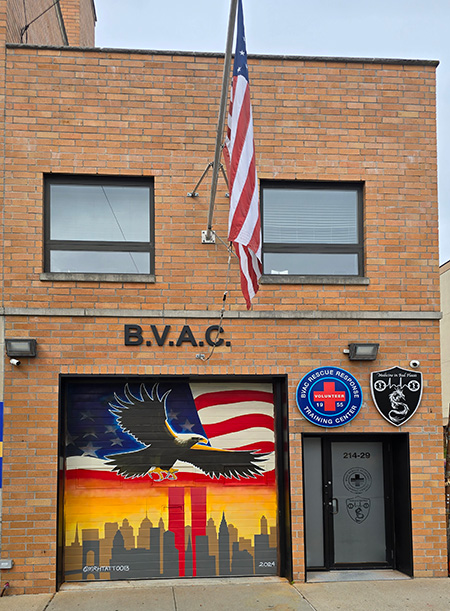
BVAC Rescue Response Training Center
214-29 42nd Ave
Bayside, NY 11361
Please note: We are located on the 2nd floor (no elevator).
Location
-
BVAC is located at 214-29 42nd Avenue, Bayside, New York 11361, in the heart of Bayside, Queens, just steps from the Bayside Long Island Rail Road station on the Port Washington Branch and close to MTA bus service, including the Q13 and Q31 on Bell Boulevard, with additional nearby access to the Q12 and NICE Bus n20G/n20H along Northern Boulevard.
Parking
-
Metered street parking on 42nd Ave
-
$0.25 per 15 minutes
-
2-hour limit
-
Free on Sundays
-
-
Bayside Municipal Parking Field: 41st Avenue & 214th Place, Bayside, NY 11361
-
Free street parking is often available one block past Bell Blvd (east or west)
Important: Do not park in the lot next to our building—vehicles will be towed or may be locked in.
Deposit / Payment Note
Deposit Due Today: $100.00 + Processing Fees
Remaining Balance Due on Class Date: $ 299.00 + Processing Fees
Agendas
| 9:00 AM to 6:00 PM for both Days |
New York State 18-Hour Concealed Carry Weapon (CCW) (3)Day 1: Firearm Safety, Responsible Ownership & New York Firearm Law
8:00 AM – 8:30 AM | Course Welcome & Orientation
8:30 AM – 10:30 AM | Module 1: General Firearm Safety & Responsible Handling
10:30 AM – 10:45 AM | Break
10:45 AM – 11:45 AM | Module 2: Safe Storage & Transportation
11:45 AM – 1:15 PM | Module 3: New York State & Federal Firearm Law – Part I
1:15 PM – 2:15 PM | Lunch Break
2:15 PM – 3:15 PM | Module 4: New York State Firearm Law – Part II
3:15 PM – 4:15 PM | Module 5: Situational Awareness & Concealed Carry Considerations
4:15 PM – 4:30 PM | Break
4:30 PM – 5:30 PM | Module 6: Conflict Management & De-Escalation
5:30 PM – 6:30 PM | Module 7: Alcohol, Drugs, Mental Health & Firearm Safety
Day 2: Firearm Law, Marksmanship, Practical Skills & Live-Fire Qualification
8:00 AM – 8:30 AM | Day 1 Review & Day 2 Orientation
8:30 AM – 10:00 AM | Module 8: Use of Force & Deadly Physical Force
10:00 AM – 11:00 AM | Module 9: Encounters with Law Enforcement
11:00 AM – 11:15 AM | Break
11:15 AM – 12:15 PM | Module 10: Basic Principles of Marksmanship
12:15 PM – 1:15 PM | Module 11: Firearm Operation & Practical Handling
1:15 PM – 2:15 PM | Lunch Break
2:15 PM – 3:15 PM | Module 12: Concealed Carry, Holsters & Practical Safety
3:15 PM – 4:00 PM | Written Proficiency Examination
4:00 PM – 6:00 PM | Required Live-Fire Training & Proficiency Assessment
6:00 PM – 6:30 PM | Course Review & Completion
Please Note: This agenda provides a general overview of the New York State Concealed Carry Firearm Safety Training course. The program consists of required in-person classroom instruction, written proficiency testing, live-fire training, and a live-fire proficiency assessment. Course scheduling, instructional sequence, practical exercises, and individual topics may be adjusted by the instructor while maintaining applicable New York State minimum training requirements. |