PALS Provider Course | AHA Pediatric Life Support Certification – BVAC (Queens, NY)
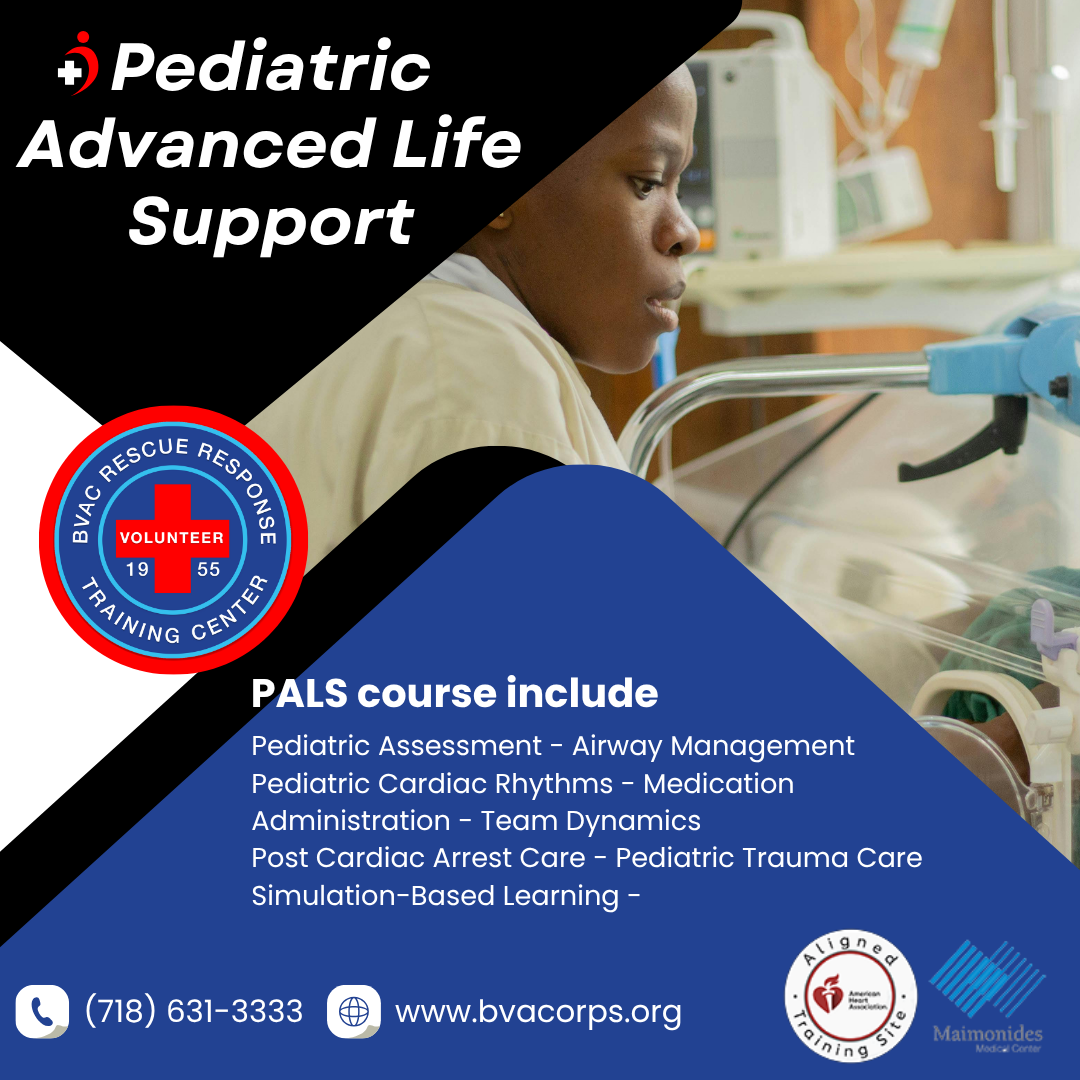
The American Heart Association (AHA) Pediatric Advanced Life Support (PALS) course is a specialized training program designed for healthcare professionals who care for critically ill or injured children. PALS equips participants with the knowledge and skills needed to provide advanced life support to pediatric patients in various healthcare settings, including hospitals, emergency departments, and pediatric clinics.
Key components of the AHA PALS course include:
-
Pediatric Assessment: PALS participants learn how to conduct thorough assessments of pediatric patients, with a focus on recognizing and managing life-threatening conditions such as respiratory distress, shock, and cardiac arrest.
-
Airway Management: The course covers pediatric airway anatomy and the use of advanced airway devices for managing respiratory distress. Participants learn techniques such as endotracheal intubation and supraglottic airway device placement.
-
Pediatric Cardiac Rhythms: PALS emphasizes the interpretation of pediatric cardiac rhythms and the administration of medications to manage arrhythmias. Participants also practice defibrillation and cardioversion techniques.
-
Medication Administration: PALS training includes the administration of pediatric-specific medications, such as epinephrine, amiodarone, and adenosine, with a focus on accurate dosages and routes of administration.
-
Team Dynamics: Effective teamwork and communication are vital in pediatric emergencies. The course emphasizes the roles and responsibilities of team members during resuscitation and stabilization of pediatric patients.
-
Post-Cardiac Arrest Care: Participants learn the critical components of post-cardiac arrest care, including targeted temperature management and strategies for optimizing neurological outcomes.
-
Pediatric Trauma Care: PALS covers the assessment and management of pediatric trauma patients, with a focus on injury prevention and recognition of life-threatening injuries.
-
Simulation-Based Learning: The course incorporates realistic pediatric emergency scenarios that allow participants to practice their skills and decision-making in a controlled environment.
PALS is essential for healthcare professionals who are likely to encounter critically ill or injured pediatric patients. It ensures that these professionals are well-prepared to provide advanced pediatric care, make critical decisions, and initiate timely interventions to improve the outcomes of pediatric patients in distress.
In summary, the AHA PALS course is a crucial training program for healthcare providers who work with pediatric patients. It equips them with the specialized skills and knowledge needed to deliver advanced life support and critical care to children, ultimately leading to improved survival rates and better outcomes for young patients in critical situations.
AHA PALS Course FAQ
Who should take the AHA PALS course?
The AHA Pediatric Advanced Life Support (PALS) course is designed for healthcare professionals who care for critically ill or injured infants and children in hospitals, emergency departments, urgent care settings, and pediatric care environments.
What does the PALS course cover?
The course covers pediatric assessment, airway management, pediatric cardiac rhythm recognition, medication administration, team dynamics, post-cardiac arrest care, pediatric trauma care, and simulation-based emergency response practice.
Why is PALS training important?
PALS training helps healthcare providers recognize and manage life-threatening pediatric emergencies such as respiratory distress, shock, arrhythmias, and cardiac arrest using structured, evidence-based care and team-based interventions.
What skills will I practice during the course?
Students practice pediatric patient assessment, airway management techniques, rhythm interpretation, medication-based interventions, defibrillation and cardioversion concepts, and coordinated resuscitation team response through realistic scenarios.
Where is the PALS course held?
The course is held at BVAC Rescue Response Training Center, 214-29 42nd Ave, Bayside, NY 11361. Please note that the facility is located on the second floor with no elevator.
Event Information
| Event Date | 04-03-2026 9:00 am - 5:00 pm |
| Cut Off Date | 04-03-2026 |
| Individual Price | Contact Us to Inquire About Classes |
| Location | BVAC Rescue Response Training Center |
Venue Information - BVAC Rescue Response Training Center
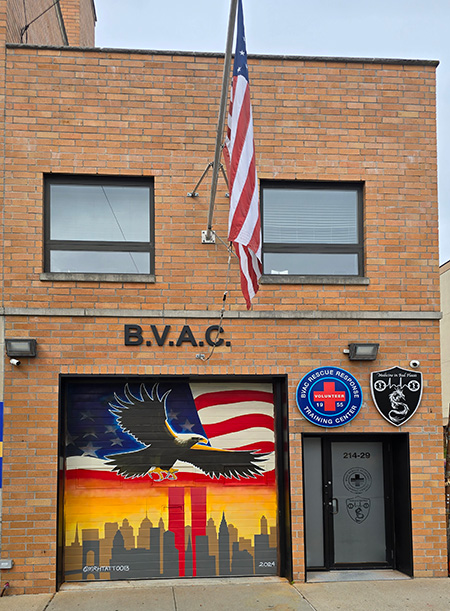
BVAC Rescue Response Training Center
214-29 42nd Ave
Bayside, NY 11361
Please note: We are located on the 2nd floor (no elevator).
Location
-
BVAC is located at 214-29 42nd Avenue, Bayside, New York 11361, in the heart of Bayside, Queens, just steps from the Bayside Long Island Rail Road station on the Port Washington Branch and close to MTA bus service, including the Q13 and Q31 on Bell Boulevard, with additional nearby access to the Q12 and NICE Bus n20G/n20H along Northern Boulevard.
Parking
-
Metered street parking on 42nd Ave
-
$0.25 per 15 minutes
-
2-hour limit
-
Free on Sundays
-
-
Bayside Municipal Parking Field: 41st Avenue & 214th Place, Bayside, NY 11361
-
Free street parking is often available one block past Bell Blvd (east or west)
Important: Do not park in the lot next to our building—vehicles will be towed or may be locked in.
Deposit / Payment Note
If you place a deposit, the checkout process may briefly display the full course price as you’re redirected to the payment portal. Once you arrive at the portal, only the deposit amount will be charged, not the full price. Finale payment is due the day of the class.