Saving Lives Together — One Skill at a Time. Contact Us.

Call Our Office
Stop the Bleed Training Course – Bleeding Control Class in Queens, NY
The "Stop the Bleed" course is a comprehensive training program developed to equip individuals with the skills and knowledge needed to respond effectively to severe bleeding emergencies. The course is typically structured into modules that cover various aspects of bleeding control and emergency response.
Here's an overview of what the course typically entails:
Introduction to Bleeding Control:
Introduction to the importance of controlling bleeding in emergency situations. Participants learn about the significance of rapid intervention and how uncontrolled bleeding can lead to severe injury or death.
Recognizing Life-Threatening Bleeding:
Participants are taught how to recognize signs of life-threatening bleeding, such as large wounds, bleeding that does not stop, or bleeding that is pulsating. They learn to assess the severity of bleeding and how to prioritize care based on the victim's condition.
Direct Pressure Technique:
One of the primary techniques taught in the course is the application of direct pressure to control bleeding. Participants learn how to apply firm pressure to a wound using their hands or dressing materials to help stem the flow of blood.
Wound Packing: In cases where direct pressure alone is not sufficient to control bleeding, participants learn how to pack wounds with gauze or other materials to apply pressure internally and promote clotting.
Tourniquet Application:
Tourniquets are devices used to constrict blood flow to a limb in cases of severe bleeding. Participants learn when and how to apply tourniquets effectively, including proper placement and tightening to achieve hemostasis without causing further harm.
Hemostatic Agents:
The use of hemostatic agents, such as special gauzes or powders designed to promote blood clotting. Participants learn how to apply these agents safely and effectively in bleeding wounds.
Hands-On Practice:
Hands-on practice is a crucial component of the Stop the Bleed course. Participants have the opportunity to practice the techniques they've learned on training mannequins or simulated wounds under the guidance of instructors.
Scenario-Based Training:
Scenario-based training to simulate real-life bleeding emergencies. Participants may work in teams to respond to simulated trauma scenarios, applying the skills they've learned under pressure.
Additional Resources and Support:
Participants are provided with additional resources, such as reference materials or online resources, to reinforce their learning and continue building their skills beyond the course.
Stop the Bleed Course FAQ
Who should take the Stop the Bleed course?
This course is ideal for parents and caregivers, teachers and school staff, coaches, youth program leaders, security personnel, workplace safety teams, community volunteers, and anyone who wants practical bleeding-control training.
What will I learn in this course?
Students learn how to recognize life-threatening bleeding, respond quickly and safely in an emergency, apply direct pressure, pack a wound, use a tourniquet correctly, and stay calm while communicating during a crisis.
Is this a hands-on training course?
Yes. The course includes instructor-led classroom training, demonstration of bleeding-control techniques, hands-on skills practice, and scenario-based learning to help build confidence and skill retention.
Why is Stop the Bleed training important?
This training gives students practical emergency skills that can help control severe bleeding before EMS arrives. It is useful at home, at work, in schools, in houses of worship, and in public spaces.
Are private group or workplace classes available?
Yes. BVAC notes that private group training, workplace classes, and community class options may be available based on scheduling and demand.
Where is the Stop the Bleed course held?
The course is held at BVAC Rescue Response Training Center, 214-29 42nd Ave, Bayside, NY 11361. Please note that the facility is located on the second floor with no elevator.
Event Information
| Event Date | 04-18-2026 12:00 pm - 2:00 pm |
| Cut Off Date | 04-17-2026 |
| Individual Price | 49.00 |
| Location | BVAC Rescue Response Training Center |
Venue Information - BVAC Rescue Response Training Center
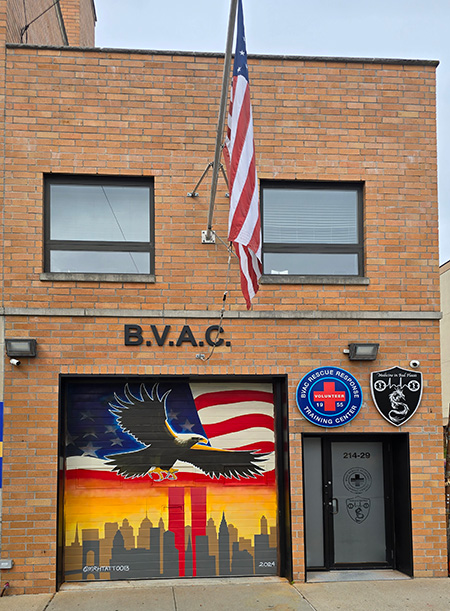
BVAC Rescue Response Training Center
214-29 42nd Ave
Bayside, NY 11361
Please note: We are located on the 2nd floor (no elevator).
Location
-
BVAC is located at 214-29 42nd Avenue, Bayside, New York 11361, in the heart of Bayside, Queens, just steps from the Bayside Long Island Rail Road station on the Port Washington Branch and close to MTA bus service, including the Q13 and Q31 on Bell Boulevard, with additional nearby access to the Q12 and NICE Bus n20G/n20H along Northern Boulevard.
Parking
-
Metered street parking on 42nd Ave
-
$0.25 per 15 minutes
-
2-hour limit
-
Free on Sundays
-
-
Bayside Municipal Parking Field: 41st Avenue & 214th Place, Bayside, NY 11361
-
Free street parking is often available one block past Bell Blvd (east or west)
Important: Do not park in the lot next to our building—vehicles will be towed or may be locked in.
Deposit / Payment Note
If you place a deposit, the checkout process may briefly display the full course price as you’re redirected to the payment portal. Once you arrive at the portal, only the deposit amount will be charged, not the full price. Finale payment is due the day of the class.