Holiday Safety Guide 2025: Christmas & New Year’s Emergencies — Essential Tips for Every Family
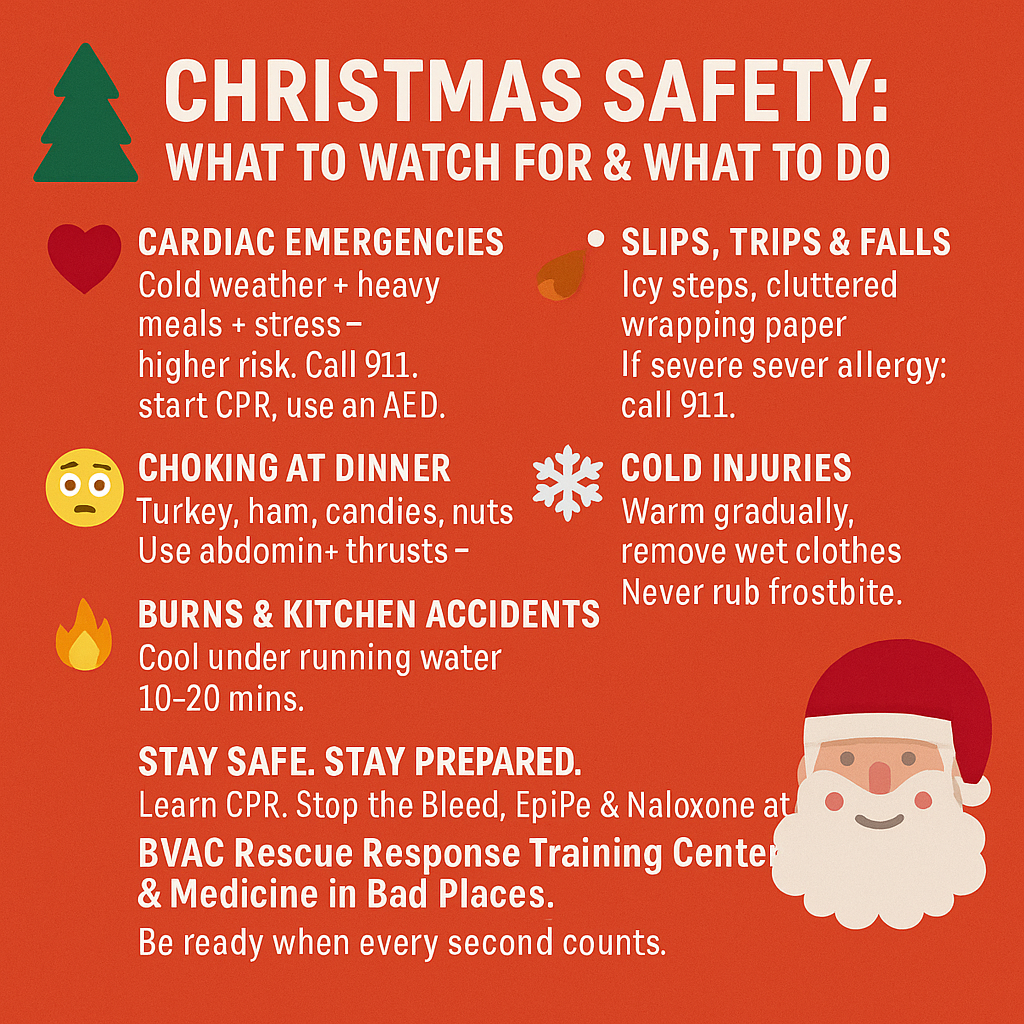
The holiday season brings celebrations, travel, winter weather, and long-awaited family time—but it’s also a period when medical emergencies spike nationwide. Between Christmas cooking, icy sidewalks, New Year’s Eve parties, increased alcohol consumption, and seasonal stress, December and early January are among the busiest months for 911 responses.
Most emergencies happen at home and often long before an ambulance arrives. With the right knowledge and basic lifesaving skills, you can protect your family, assist your neighbors, and make a critical difference during this high-risk season.
This BVAC Holiday Safety Guide covers the most common Christmas and New Year’s emergencies, warning signs to watch for, and important steps to take while waiting for professional help to arrive.
Cardiac Emergencies Rise During Christmas & New Year’s
Cold temperatures, holiday stress, heavy meals, travel, and alcohol can significantly increase the risk of heart attacks and cardiac arrest during the holidays. December 25th, December 26th, and January 1st consistently rank among the highest days for heart-related deaths.
Warning Signs
What to Do
Early CPR can double or triple survival chances.
Getting trained in AHA BLS CPR is one of the best ways to protect your family during the holiday season.
Kitchen Accidents & Burns — A Christmas Day Hot Spot
Holiday cooking leads to a dramatic increase in burns, cuts, grease fires, and kitchen injuries, especially with crowded kitchens and distractions.
Safety Tips
First Aid for Burns
Slips, Falls & Winter Weather Injuries
Holiday decorations, icy sidewalks, and snowy driveways cause thousands of injuries every December.
Prevention
First Response
New Year’s Eve Alcohol-Related Emergencies
New Year’s Eve generates a surge in emergency room visits due to:
Signs of Alcohol Poisoning
What to Do
Do NOT leave them alone, even if you think they “just need to sleep it off.”
Hypothermia & Cold Exposure
Cold weather, winter storms, and holiday travel can put adults, children, and older adults at risk for hypothermia.
Warning Signs
What to Do
Pet Emergencies During Christmas & New Year’s
The holidays introduce new hazards for pets.
Common Pet Hazards
BVAC Tip:
Take a Pet First Aid & Disaster Response course to learn CPR, choking relief, and emergency care for pets.
Allergic Reactions & Holiday Food Emergencies
Holiday meals often include ingredients that can trigger severe allergic reactions.
Warning Signs
What to Do
Fireworks & New Year’s Injuries
Both legal and illegal fireworks can cause severe injuries, especially to hands, eyes, and face.
Safety Tips
How to Protect Your Family: Get Trained Before an Emergency Happens
Emergencies rarely happen in front of professionals—they happen in front of regular people.
BVAC Rescue Response Training Center offers nationally recognized courses that prepare you to act fast:
✔ AHA BLS CPR
✔ First Aid & Stop the Bleed
✔ First Response Essentials
✔ Pet First Aid & Disaster Response
✔ Tactical Medicine (TECC / PHTLS)
✔ Emergency Medication Skills: EpiPen & NARCAN
Our courses help families, workplaces, caregivers, and community members stay confident and prepared, especially during the high-risk holiday season.
The Best Gift You Can Give This Holiday Season Is Safety
Christmas and New Year’s should be filled with joy—not preventable emergencies.
With a few simple precautions and lifesaving skills, you can protect your family, help your community, and respond effectively when every second counts.
Headquarters:
214-29 42nd Avenue
Bayside, New York 11361
Mailing Address:
214-29 42nd Avenue
Bayside, New York 11361
Phone: + 1 (718) 631-3333
Contact Form